Municipal curbside solid waste guidelines in the City of Columbia limit weekly yard trash to piles no larger than 4 feet long and 4 feet high, which leaves property owners stranded after high winds bring down mature…
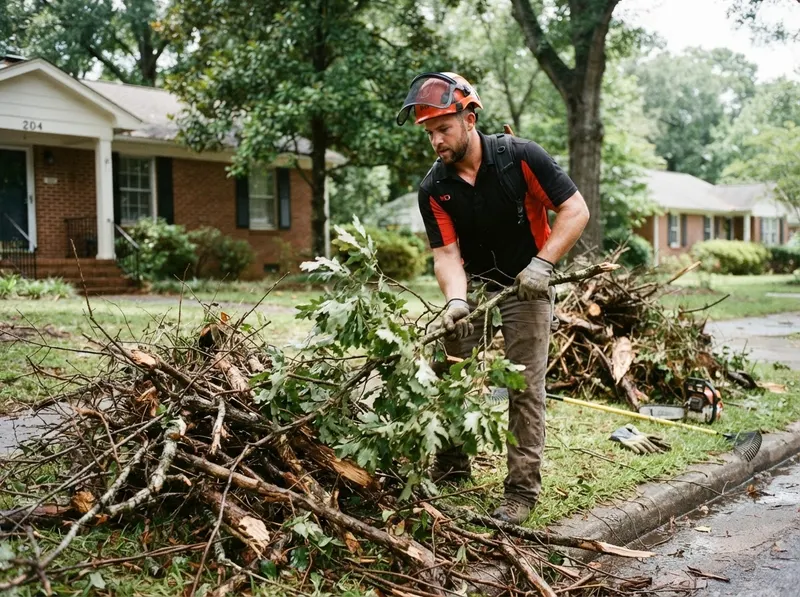
Municipal curbside solid waste guidelines in the City of Columbia limit weekly yard trash to piles no larger than 4 feet long and 4 feet high, which leaves property owners stranded after high winds bring down mature hardwoods across older neighborhoods like Shandon, Earlewood, and Heathwood. When summer squalls or winter fronts send water oak branches onto sod or driveways, the volume routinely exceeds what standard city bag-and-bundle rules accept. Renting a direct-delivery roll-off container solves this log-jam by handling irregular tree trunks, torn privacy fences, and thick pine brush without the need to cut every branch down to municipal length. Placing solid protective wooden skids beneath roll-off wheels prevents cracking on residential concrete and protects sod in low-lying properties near Lake Katherine and Forest Acres.
Selecting the right debris option comes down to a clear trade-off between labor and equipment placement space. A 10-yard roll-off container occupies an 8-foot by 12-foot footprint, holding roughly 4 standard pickup truck loads, making it ideal for narrow, tree-lined driveways along Cottontown or Elmwood Park where parking clearance is constrained. For massive multi-tree downfalls along residential boundaries in Rosewood or properties off Millwood Avenue, a 20-yard or 30-yard container holds 8 to 12 pickup beds worth of organic material, eliminating repeated trailer runs to the Richland County C&D landfill on Screaming Eagle Road. If the pile consists entirely of clean brush, property owners avoid mixed-waste surcharges because green waste is routed straight to local chipping yards rather than standard trash landfills.
Clearing operations follow three simple operational steps. First, calling dispatch at (839) 317-5195 sets the delivery date and secures driver instructions regarding overhead power drops and gate widths. Second, the driver reverses the container onto dedicated wooden ground runners, keeping steel wheels off pavers and asphalt. Third, once the customer loads the container to water level, keeping logs below the top rail to ensure DOT transit tarp compliance, the carrier hauls the waste directly to processing without hidden broker fees.
Every job gets a firm, written price after a free on-site visit.
Tell us about your storm debris and bulk yard waste clearing job in Columbia and we'll send a clear, written quote, usually the same day.
 HaulBox Dumpster Rental