Residential remodels and structural repairs generate bulky, dense materials that exceed standard municipal collection guidelines across Richland County. A standard kitchen gut or flooring replacement produces hundreds…
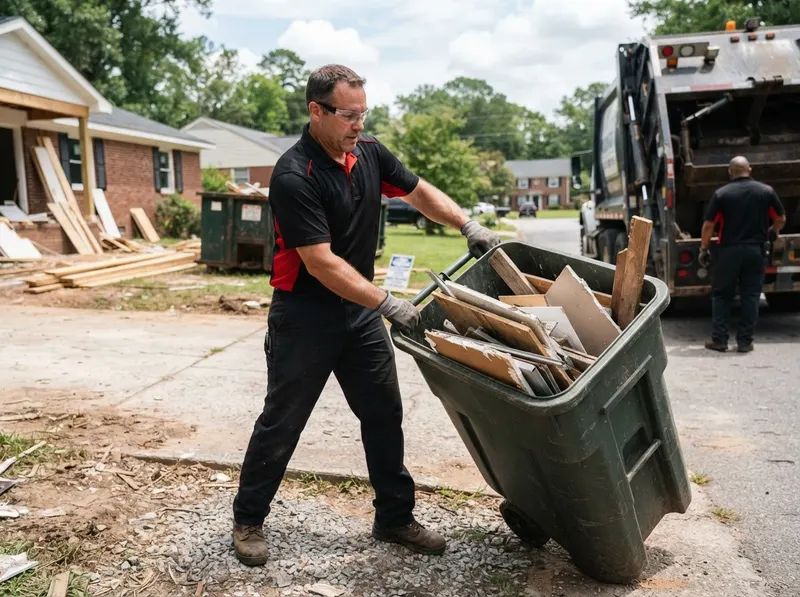
Residential remodels and structural repairs generate bulky, dense materials that exceed standard municipal collection guidelines across Richland County. A standard kitchen gut or flooring replacement produces hundreds of pounds of splintered subfloor, broken tile, and gypsum board that city sanitation crews leave behind on collection day. Local construction and demolition waste disposal operates on clear volume and weight limits so renovators avoid surprise overage penalties. A 10-yard roll-off container occupies an 8-foot by 12-foot footprint and holds roughly 4 standard pickup truck beds of dense material, which fits smaller tile tear-outs in tight Cottontown driveways. A 20-yard roll-off measures 8 feet wide by 22 feet long, holds approximately 8 pickup truck loads, and provides the capacity required for whole-room additions or cedar shingle replacements in Rosewood and Shandon without overflowing the container walls.
Selecting the right container size hinges on the specific density of the building materials. Framing lumber and sheetrock demand physical cubic volume, whereas masonry, concrete footings, and asphalt shingles rapidly max out legal highway haul weights before the container is visually full. A 15-yard dumpster loaded to the rim with solid brick or wet plaster will exceed legal tandem-axle axle limits, triggering overweight landfill surcharges at regional disposal facilities. For heavy structural masonry, a dedicated low-sided 10-yard container filled no higher than the top rail allows safe mechanical winching onto the roll-off rails. Conversely, lighter debris like fiberglass insulation, vinyl siding, and pine framing studs should be packed into a 20-yard or 30-yard container to eliminate multiple mid-project swap-outs. Direct truck dispatch coordinates delivery timing, and every drop-off uses protective wooden boards beneath the steel rollers to safeguard asphalt and aggregate concrete driveways from surface gouging.
Executing a clean drop requires assessing site logistics before the delivery truck enters the street. Narrow residential corridors in historic areas like Elmwood Park and Earlewood present low-hanging tree canopies and tight turning radiuses, requiring at least 14 feet of vertical clearance and 60 feet of straight approach space for the hoist frame to angle back. In Forest Acres, Heathwood, and Lake Katherine, sloped driveways demand wheel chocking and level placement parallel to the garage entrance to prevent shifting during heavy summer rainstorms. Placing a container directly on private driveways eliminates the requirement for municipal street-use permits from the City of Columbia. When job parameters require placing the roll-off on an active street lane in Five Points or near The Vista, local traffic ordinances govern safety lighting and roadway placement permits. The trade-off between container footprint and driveway space means sacrificing a vehicle parking stall for the project duration to gain effortless roll-in access via the hinged rear walk-in door.
Every job gets a firm, written price after a free on-site visit.
Tell us about your construction and demolition waste disposal job in Columbia and we'll send a clear, written quote, usually the same day.
 HaulBox Dumpster Rental