Disposing of dense structural rubble requires a dedicated containment strategy because concrete weighs approximately 4,000 pounds per cubic yard. A standard 20-yard municipal cleanout container filled with masonry…
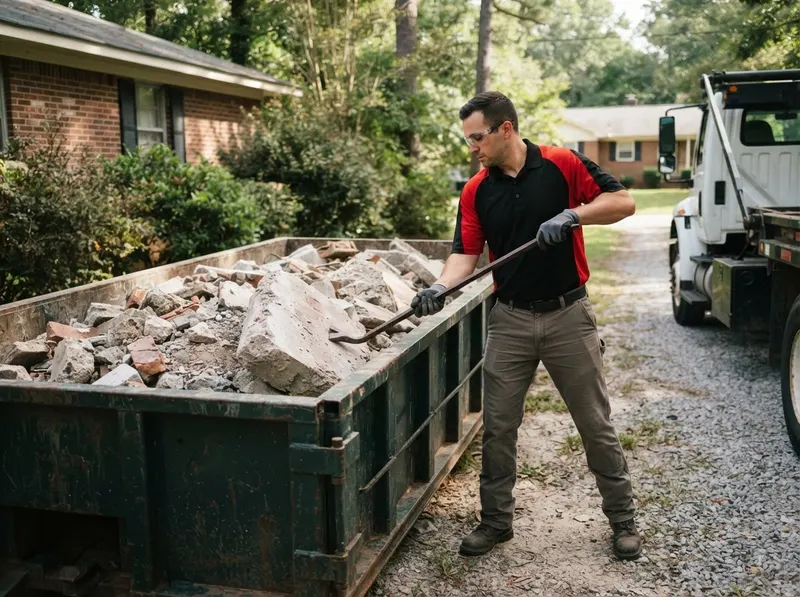
Disposing of dense structural rubble requires a dedicated containment strategy because concrete weighs approximately 4,000 pounds per cubic yard. A standard 20-yard municipal cleanout container filled with masonry inevitably exceeds the legal gross vehicle weight limits of standard tandem-axle roll-off trucks, resulting in refused pickup or heavy roadside axle fines. A specialized 10-yard low-boy container measures 16 feet long, 7.5 feet wide, and only 3 feet high, holding roughly 4 standard pickup truck beds of dense material. The 36-inch sidewall height allows manual shovel loading of dirt and wheelbarrow dumping of broken sidewalk chunks without requiring dangerous overhead lifting. To protect concrete driveways and asphalt pads from gouges, heavy ground-contact runners rest directly on two-inch wooden planking laid down before the steel rollers touch down.
The decision between a heavy inert roll-off container and mixed municipal waste disposal comes down to material segregation. Inert containers accept unmixed concrete, gravel, brick, cured asphalt, or clean soil, which routes directly to regional aggregate recyclers rather than taking up expensive municipal landfill space. If you mix standard household trash, drywall, tree stumps, or plastic into an inert container, the load fails processing inspection and converts into mixed municipal waste, triggering standard municipal disposal rates of $45 to $75 per ton on a load that easily weighs 8 to 10 tons. When tearing out a cracked patio in Shandon, repaving a cracked driveway off Rosewood Drive, or grading backyard foundation drainage in Forest Acres, renting a dedicated inert roll-off provides predictable fixed billing, whereas keeping mixed trash alongside masonry guarantees oversized overage charges.
Local site access dictates container positioning across Columbia's established neighborhoods. Narrow, tree-lined residential corridors in Cottontown, Elmwood Park, and Earlewood often present overhead power line drops and strict street parking regulations. Placing a container in the street right-of-way within the City of Columbia requires an encroachment permit, whereas private driveway delivery requires no city paperwork. Drivers navigate direct routes along Gervais Street, Assembly Street, and Harden Street to place boxes precisely on compacted driveways, stone parking pads, or alley aprons. For projects near Lake Katherine or Heathwood featuring soft sod or delicate historic pavers, the trade-off is clear: keeping the box entirely on the hard driveway ensures zero lawn compaction, but requires hauling materials via wheelbarrow from the job site to the driveway pad.
Every job gets a firm, written price after a free on-site visit.
Tell us about your heavy inert material roll-off disposal job in Columbia and we'll send a clear, written quote, usually the same day.
 HaulBox Dumpster Rental